
A cylinder of oxygen looks simple on a welding cart or beside a hospital bed. The value chain that put it there is not. Somewhere upstream, oxygen was separated from ambient air, compressed, analyzed, and filled into a steel or aluminum cylinder that had been inspected, tested, and prepared for service. That cylinder was then transported, delivered, and eventually returned empty to be filled again. For an entrepreneur or an established industrial gas distributor evaluating whether to invest in an oxygen cylinder filling business, the central question is not whether oxygen demand exists. It is whether the economics of on-site PSA generation — making oxygen from air rather than buying it in bulk — can support a profitable, sustainable business at the scale the local market can absorb.
This article provides a structured look at the costs, revenues, and operational realities of starting an oxygen cylinder filling operation built around a PSA oxygen plant. The numbers presented are indicative ranges based on typical industrial practice. Every market has its own electricity tariffs, cylinder pricing, regulatory requirements, and competitive landscape. The goal is to equip you with the right questions and the framework to calculate the answers for your specific situation.
I. The Oxygen Cylinder Filling Business Model: How It Works
From PSA plant to filled cylinder: the process flow
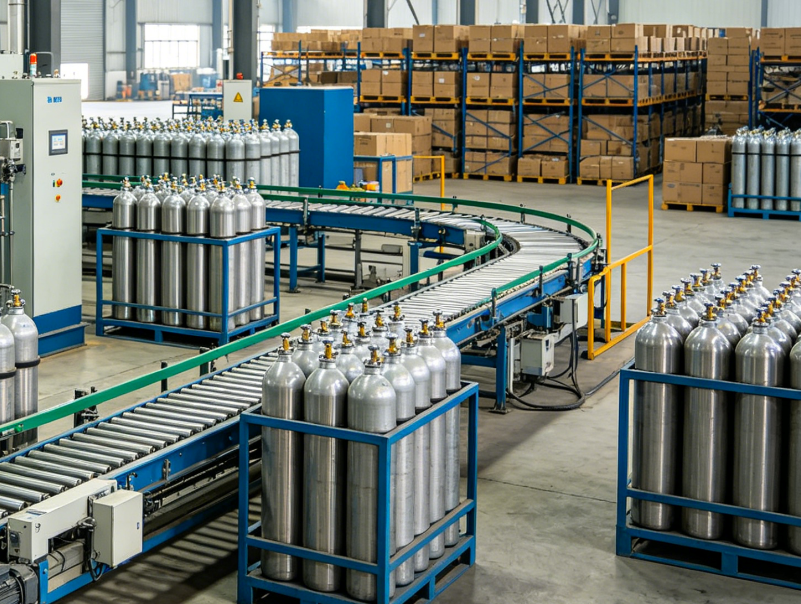
A PSA oxygen plant draws ambient air through an intake filter, compresses it, removes moisture and particulates through a series of dryers and filters, and passes the clean, dry air through columns filled with zeolite molecular sieve. The sieve selectively adsorbs nitrogen, allowing oxygen to pass through as the product gas. The oxygen exits the plant at a purity typically between 90 and 95 percent and at low pressure — usually 3 to 6 bar gauge. From the PSA plant buffer tank, the oxygen flows to a booster compressor that raises its pressure to the cylinder filling pressure, typically 150 to 200 bar for standard industrial and medical cylinders. The high-pressure oxygen passes through a filling manifold with multiple cylinder connections, where each cylinder is filled, checked, and tagged before entering the distribution chain. The process is continuous when the plant is running and batch-oriented at the filling manifold, where cylinders are connected and disconnected in groups throughout the day.
Medical vs. industrial oxygen markets and their different requirements
Oxygen cylinders serve two broad markets that operate under different regulatory frameworks. Medical oxygen is a pharmaceutical product in most jurisdictions. It must meet pharmacopoeia standards — typically 93 percent ± 3 percent purity per the European Pharmacopoeia or equivalent national standards — and the filling facility must hold a manufacturing license, follow good manufacturing practices, and maintain batch traceability from plant to patient. The compliance overhead is significant but the selling price per cylinder is typically higher than industrial oxygen. Industrial oxygen serves welding, metal cutting, glass blowing, aquaculture, and a range of other applications where purity requirements are often 90 to 95 percent but the regulatory documentation burden is lower. Many cylinder filling businesses serve both markets from the same PSA plant, using the same oxygen stream but segregating cylinder inventories and documentation systems.
Typical customer profiles and demand patterns
The customer base for a cylinder filling business varies with the local economy. A plant located near a regional hospital or a cluster of clinics may derive the majority of its revenue from medical oxygen, with consistent base demand punctuated by seasonal surges during respiratory illness seasons. A plant in an industrial area may serve welding workshops, fabrication shops, and small manufacturing facilities, where demand tracks construction and manufacturing activity. Many successful filling businesses serve a mix of both, using the industrial customer base to provide stable throughput and the medical customer base to provide higher unit margins. Understanding who will buy the oxygen — and how much they will buy per week, per month, and per year — is the most important piece of market analysis that precedes any financial calculation.
II. Capital Costs: What You Are Really Paying For
PSA oxygen plant equipment cost by capacity range
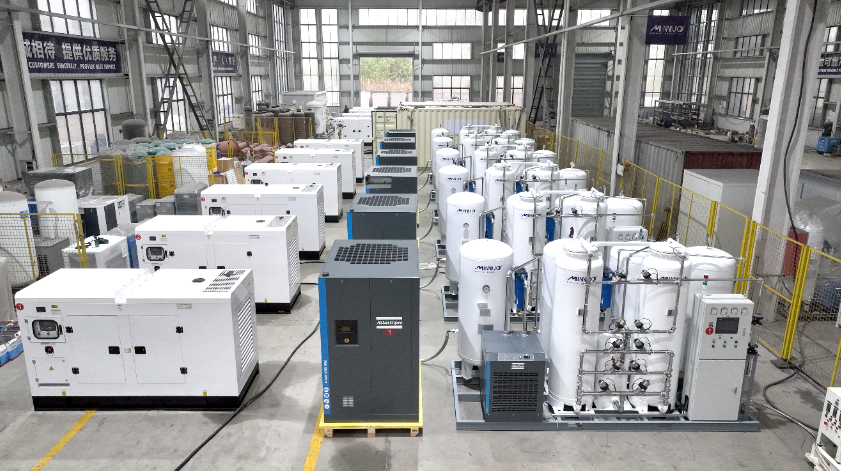
The PSA oxygen plant itself is the largest single capital item. Costs scale with output capacity, measured in normal cubic meters of oxygen per hour. A small plant delivering 5 Nm³/h of oxygen — suitable for filling perhaps 15 to 20 standard cylinders per day — will typically cost between 25,000 and 45,000 USD depending on configuration, build quality, and country of origin. A medium-capacity plant producing 20 Nm³/h, capable of filling 60 to 80 cylinders per day, falls in the 60,000 to 100,000 USD range. A larger plant producing 50 Nm³/h, suitable for a regional filling hub, may cost 130,000 to 200,000 USD. These are equipment costs for the PSA generator skid including the air compressor, air treatment, oxygen generation columns, buffer tank, and control system. They do not include the filling equipment, cylinders, or facility costs.
Cylinder filling manifold, booster compressor, and storage
The PSA plant delivers oxygen at low pressure. To fill cylinders at 150 to 200 bar, a booster compressor is required. A booster suitable for a small filling operation costs 15,000 to 30,000 USD. The filling manifold — a high-pressure piping assembly with individual cylinder connection pigtails, valves, and pressure gauges — costs 5,000 to 15,000 USD depending on the number of filling positions. An oxygen buffer storage system between the PSA plant and the booster ensures a steady supply of low-pressure oxygen to the booster inlet and costs 3,000 to 8,000 USD. Together, the filling equipment package typically adds 25,000 to 55,000 USD to the capital budget.
Cylinder inventory, testing, and certification
Cylinders are a substantial and often underestimated capital cost. A single 50-liter steel oxygen cylinder costs between 120 and 250 USD new, depending on the manufacturer, material specification, and whether it is equipped with a standard valve or an integrated regulator. A filling business needs enough cylinders to support at least two to three times the daily filling capacity, because cylinders are in transit, at customer sites, awaiting filling, and being tested at any given time. A small operation filling 20 cylinders per day needs a working inventory of 60 to 80 cylinders, representing an investment of 8,000 to 20,000 USD. Used cylinders are available at lower cost but must be carefully inspected for internal corrosion, thread condition, and remaining service life. Cylinder testing — hydrostatic pressure testing and internal inspection — is required at intervals specified by local regulations, typically every 5 to 10 years, and costs 10 to 30 USD per cylinder per test cycle.
Facility requirements: space, ventilation, power, and permitting
The facility that houses the oxygen plant and filling operation must meet safety and operational requirements. Oxygen enrichment in an enclosed space increases combustion risk, so ventilation is mandatory. The filling area should be separated from the PSA plant by a fire-rated wall or located in a separate building with a safety exclusion zone. Electrical installations in the filling area must be rated for use in oxygen-enriched atmospheres. The facility needs three-phase power sized to the PSA plant and booster compressor combined load. A small 5 Nm³/h operation may need 30 to 40 kW of connected load. A 50 Nm³/h operation may need 200 to 300 kW. Floor space of 100 to 200 square meters is typical for a small operation, with larger plants requiring proportionally more. Facility costs — building construction or leasehold improvements, electrical infrastructure, safety systems, and permitting — add 20,000 to 100,000 USD or more to the project budget depending on whether an existing building is adapted or a new one is constructed.
III. Operating Costs: The Numbers That Determine Profitability
Electricity consumption and cost per cylinder filled
Electricity is the dominant variable cost of operating a PSA oxygen plant. A well-designed plant producing 93 percent oxygen consumes approximately 0.4 to 0.6 kWh of electricity per normal cubic meter of oxygen, depending on the compressor efficiency, the pressure settings, and the ambient conditions. A standard 50-liter cylinder filled to 150 bar contains approximately 7.5 normal cubic meters of oxygen. At a specific energy consumption of 0.5 kWh/Nm³, the electricity cost per filled cylinder is 3.75 kWh. At an industrial electricity tariff of 0.10 USD per kWh, this translates to approximately 0.38 USD per cylinder. At 0.20 USD per kWh, the cost doubles to 0.75 USD per cylinder. The booster compressor adds additional electricity consumption, typically 0.1 to 0.2 kWh per cylinder. Compared to the delivered cost of a liquid-oxygen-filled cylinder — where the oxygen itself may cost 3 to 8 USD per cylinder at bulk rates, plus delivery and cylinder handling — the electricity cost advantage of on-site generation is stark.
Labor, maintenance, and consumables
A small cylinder filling operation can be run by one or two trained operators per shift. Labor costs depend on local wage rates and the number of shifts operated. Annual preventive maintenance for the PSA plant includes compressor oil and filter changes, inlet filter replacement, dryer inspection, and oxygen analyzer calibration. A maintenance budget of 3 to 5 percent of the equipment capital cost per year is a reasonable starting estimate. Consumables include compressor lubricant, filter elements, and — on a multi-year cycle — the molecular sieve material itself. PSA sieve beds typically require replacement every 5 to 8 years depending on operating conditions and inlet air quality. A sieve replacement for a medium-capacity plant costs 5,000 to 15,000 USD, which should be accrued as a sinking fund over the sieve life rather than taken as a single-year expense.
Cylinder logistics: transport, testing, and loss rates
Filled cylinders must reach customers and empty cylinders must return. A small operation may start with a single delivery vehicle — a truck or van equipped with cylinder restraints and compliant with local hazardous goods transport regulations. Vehicle cost, fuel, insurance, and driver labor are ongoing operating expenses. Cylinders do not always return on time or in usable condition. A percentage of cylinders will be lost annually to theft, damage, or customers who hold them beyond the agreed return period. A cylinder loss rate of 2 to 5 percent per year is typical, and the replacement cost of lost cylinders must be built into the operating budget. Cylinder testing and recertification, as noted above, occurs on a periodic cycle and should be budgeted as a per-cylinder annual cost.
Hidden costs: downtime, spare parts inventory, and quality compliance
Unplanned downtime is a profitability killer. A compressor failure that stops oxygen production for a week while a spare part is sourced and shipped erases that week’s revenue while most fixed costs continue. A prudent operator keeps a spare parts inventory that includes compressor service kits, filter elements, oxygen analyzer sensors, solenoid valves, and a set of filling manifold pigtails and seals. The value of this inventory, typically 5,000 to 15,000 USD depending on plant size, is part of the working capital requirement. For medical oxygen operations, quality compliance costs — including periodic third-party purity testing, calibration gas for the oxygen analyzer, and the administrative overhead of batch recordkeeping — are ongoing and non-negotiable. These costs are modest relative to electricity and labor, but they must be accounted for in the operating budget.
IV. Revenue, Pricing, and Profit Margins
Market pricing for medical and industrial oxygen cylinders
Oxygen cylinder pricing varies widely by market, influenced by local competition, the cost of alternative oxygen supply, and regulatory conditions. As of 2026, a standard 50-liter medical oxygen cylinder filled to 150 bar sells for 8 to 25 USD in most emerging markets, with the higher end reflecting markets with limited competition or difficult logistics. Industrial oxygen cylinders in the same markets sell for 5 to 15 USD per fill. In developed markets, prices are higher due to higher labor, transport, and compliance costs. The price premium for medical oxygen over industrial oxygen ranges from 30 to 100 percent, reflecting the additional regulatory overhead and the higher willingness to pay in the healthcare sector. A new entrant into a market should research actual local pricing by surveying potential customers and competitors, not by relying on international averages.
Breakeven analysis: cylinders per day to cover costs
A small PSA oxygen plant producing 5 Nm³/h can fill approximately 15 to 20 cylinders per day operating a single shift. The fixed costs — depreciation on equipment, facility costs, base labor, and cylinder replacement — run to roughly 20,000 to 40,000 USD per year depending on the local cost environment. Variable costs — primarily electricity and cylinder testing — run roughly 1 to 2 USD per cylinder. If the fixed costs are 30,000 USD per year and the average net revenue per cylinder is 5 USD after variable costs, the breakeven volume is 6,000 cylinders per year, or roughly 20 cylinders per day assuming 300 operating days. A plant operating near its daily capacity is comfortably above breakeven. A plant operating at half capacity is barely covering fixed costs. The utilization rate is the single most important determinant of profitability.
How plant utilization rate drives profitability
The economics of a cylinder filling business are dominated by the fixed cost base. Once the plant, the facility, and the cylinder inventory are in place, the incremental cost of filling one more cylinder is dominated by electricity, which costs well under one dollar per cylinder as calculated above. Every additional cylinder filled beyond the breakeven volume contributes its full selling price, less only the small variable cost, to the bottom line. A plant running a single shift at 70 percent utilization may generate a modest profit. The same plant running two shifts at 90 percent utilization generates a substantially higher profit because the fixed costs are spread across three to four times as many cylinders. The business case for investing in a PSA oxygen cylinder filling plant often hinges less on the equipment cost and more on the realistic assessment of how quickly the local market can absorb the plant’s output.
Typical payback period ranges
For a well-sited, well-managed PSA cylinder filling operation, simple payback periods of 18 months to 3 years are commonly achieved. A plant in a strong market with limited competition, serving a mix of medical and industrial customers at high utilization, may pay back its initial investment in under two years. A plant in a competitive market with lower cylinder pricing and slower customer acquisition may see payback periods of 3 to 5 years. These ranges assume that the plant operates at or above 60 percent of nameplate capacity within the first year. The businesses that fail to achieve acceptable returns are generally those where the market demand was overestimated, the plant was oversized for the actual customer base, or the working capital to support cylinder inventory and customer credit terms was insufficient to reach breakeven volume.
V. Key Decisions That Make or Break a Cylinder Filling Startup
PSA plant sizing: too small limits growth, too large wastes capital
Selecting the capacity of the PSA plant is the most consequential decision in the project. A plant that is too small quickly becomes a bottleneck. Adding a second plant later to expand capacity costs more than sizing the first plant appropriately from the start, because the second plant requires its own compressor, dryer, and control system rather than sharing the infrastructure of a larger single unit. A plant that is too large, on the other hand, consumes capital that could have been deployed elsewhere, increases the breakeven volume, and may run at low utilization for years while the customer base grows into the capacity. The right approach is to base the plant size on a conservative estimate of year-two demand — not year-one, and not the aspirational year-five — with enough margin to accommodate demand growth without stranding capital.
Medical certification: pharmacopoeia compliance, licensing, and documentation
If the business intends to sell medical oxygen, the regulatory pathway must be understood before the plant is ordered. Medical oxygen is regulated as a pharmaceutical product. The filling facility must obtain a manufacturing license from the national medicines regulatory authority. The PSA plant must be equipped with an oxygen analyzer that continuously monitors purity, with an automatic divert valve that rejects off-specification gas, and with a data logging system that records purity throughout each production run. Batch traceability — the ability to trace each cylinder back to the production date, the analyzer readings, and the operator who filled it — is a standard requirement. Documentation must be maintained and made available for regulatory inspections. A PSA plant that lacks these features can be upgraded later, but the upgrade is more expensive and more disruptive than specifying them at the initial purchase. For entrepreneurs entering the medical oxygen market, the equipment should be specified as “medical grade” from the outset, even if the local regulatory requirement is not yet enforced, because the cost of retrofitting compliance is higher than the marginal cost of building it in.
Location, competition, and the true size of the addressable market
The addressable market for a cylinder filling plant is limited by geography. Filled oxygen cylinders are heavy and classified as dangerous goods for transport. Delivery beyond a 100 to 150 kilometer radius from the filling plant becomes uneconomical relative to the value of the gas inside the cylinder, because the transport cost per cylinder rises with distance while the selling price does not. A realistic market assessment maps every hospital, clinic, welding shop, and industrial user within that radius, estimates their current oxygen consumption, and identifies their current supplier. If the area is already served by an established liquid oxygen distributor with a large cylinder fleet and long-term customer contracts, market entry is possible but will require a clear competitive advantage — lower price, more reliable delivery, or better service — to win customers. If the area is underserved, with customers experiencing frequent stockouts or paying high prices for cylinder deliveries from a distant plant, the market opportunity is correspondingly stronger.
Choosing between containerized vs. in-building installation
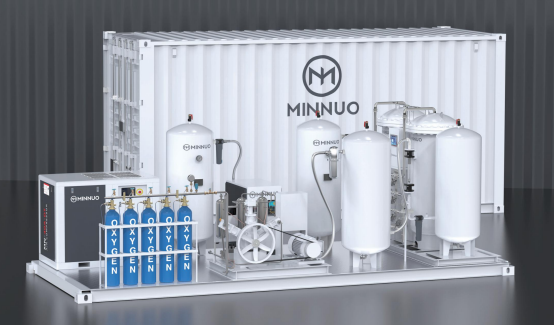
PSA oxygen plants can be supplied in two physical configurations: installed inside a customer-provided building, or pre-installed in a shipping container as a turnkey plug-and-play unit. Containerized plants offer faster installation — the plant arrives on a truck, is lifted onto a prepared concrete pad, connected to power, and can begin producing oxygen within days. They also provide weather protection, sound attenuation, and a degree of security. The trade-off is cost: a containerized plant adds 10,000 to 25,000 USD to the equipment price compared to an equivalent in-building installation. An in-building installation offers more flexibility in layout, easier expansion, and lower initial equipment cost, but requires the owner to provide a suitable building with ventilation, power distribution, and safety systems. The choice depends on the local construction cost environment, the timeline for commissioning, and whether the business has access to an existing suitable structure.
FAQ
Q1: How much does it cost to start a small oxygen cylinder filling business?
A1: A small operation based on a 5 Nm³/h PSA oxygen plant, capable of filling 15 to 20 cylinders per day, typically requires a total capital investment of 80,000 to 150,000 USD. This includes the PSA plant, booster compressor, filling manifold, initial cylinder inventory, and basic facility costs. Larger plants scale up in proportion to capacity, with a 20 Nm³/h operation typically falling in the 180,000 to 300,000 USD range and a 50 Nm³/h regional filling hub in the 350,000 to 600,000 USD range, all-in.
Q2: What is the profit margin on an oxygen cylinder filling business?
A2: Gross margins per cylinder are typically 60 to 80 percent after electricity, labor, and consumable costs. Net margins depend on utilization rate. A well-run plant operating at 70 percent capacity or higher can achieve net profit margins of 30 to 50 percent after fixed costs. The most profitable operations serve a mix of medical and industrial customers, maintain high cylinder utilization, and control transport costs through efficient delivery route planning.
Q3: How long does it take for a PSA oxygen plant to pay for itself?
A3: Simple payback periods of 18 months to 3 years are typical for a well-sited operation. Plants serving underserved medical markets or remote industrial users with limited competition tend toward the shorter end of this range. Plants in competitive urban markets with established suppliers may take 3 to 5 years. The key variable is the utilization rate — the faster the plant reaches high utilization, the faster it pays back.
Q4: What is the difference between medical and industrial oxygen from a PSA plant?
A4: The oxygen molecule is identical. The difference lies in the regulatory framework, documentation, and quality assurance. Medical oxygen must meet pharmacopoeia purity standards, the filling facility must hold a manufacturing license, and batch traceability from production to patient is required. A PSA plant can produce oxygen suitable for both applications, but the facility and operating procedures for medical oxygen must comply with pharmaceutical good manufacturing practices.
Q5: How many cylinders can a PSA oxygen plant fill per day?
A5: A standard 50-liter cylinder filled to 150 bar contains approximately 7.5 Nm³ of oxygen. A 5 Nm³/h plant can therefore fill roughly 15 to 20 cylinders in a single 8-hour shift, accounting for filling manifold changeover time and booster compressor cycling. A 20 Nm³/h plant can fill 60 to 80 cylinders per shift. These are practical estimates; actual throughput depends on manifold design, operator efficiency, and the mix of cylinder sizes being filled.
Q6: Do I need a license to start an oxygen cylinder filling business?
A6: Yes. At minimum, the facility must comply with local industrial safety regulations for high-pressure gas handling and storage. If medical oxygen is produced, a pharmaceutical manufacturing license from the national medicines regulatory authority is required in most countries. Cylinder filling and transport are also subject to dangerous goods regulations. The specific permits and licenses vary by jurisdiction and should be researched as part of the project feasibility study before committing to equipment purchase.
Q7: Can I start with a small PSA plant and add capacity later?
A7: Yes, and this is a common strategy. A small initial plant proves the market, establishes the customer base, and generates cash flow. Additional PSA modules can be added in parallel as demand grows. When planning for expansion, the filling manifold and booster compressor should be sized for the eventual larger capacity from the start, because upgrading these components later is more expensive and disruptive than oversizing them initially. The facility electrical infrastructure should also be specified with expansion in mind.
Conclusion
Starting an oxygen cylinder filling business built around a PSA oxygen plant is not a speculative venture into an unproven market. Oxygen is an essential commodity with stable, growing demand across healthcare and industry. The technology to generate it on site from ambient air is mature, reliable, and — when correctly sized and specified — economically compelling. The challenge is not the chemistry or the engineering. It is the business analysis that must precede the equipment order: understanding the local market, sizing the plant to match realistic demand, budgeting for the full capital requirement including cylinders and facility costs, and committing to the operational discipline that medical oxygen compliance demands.
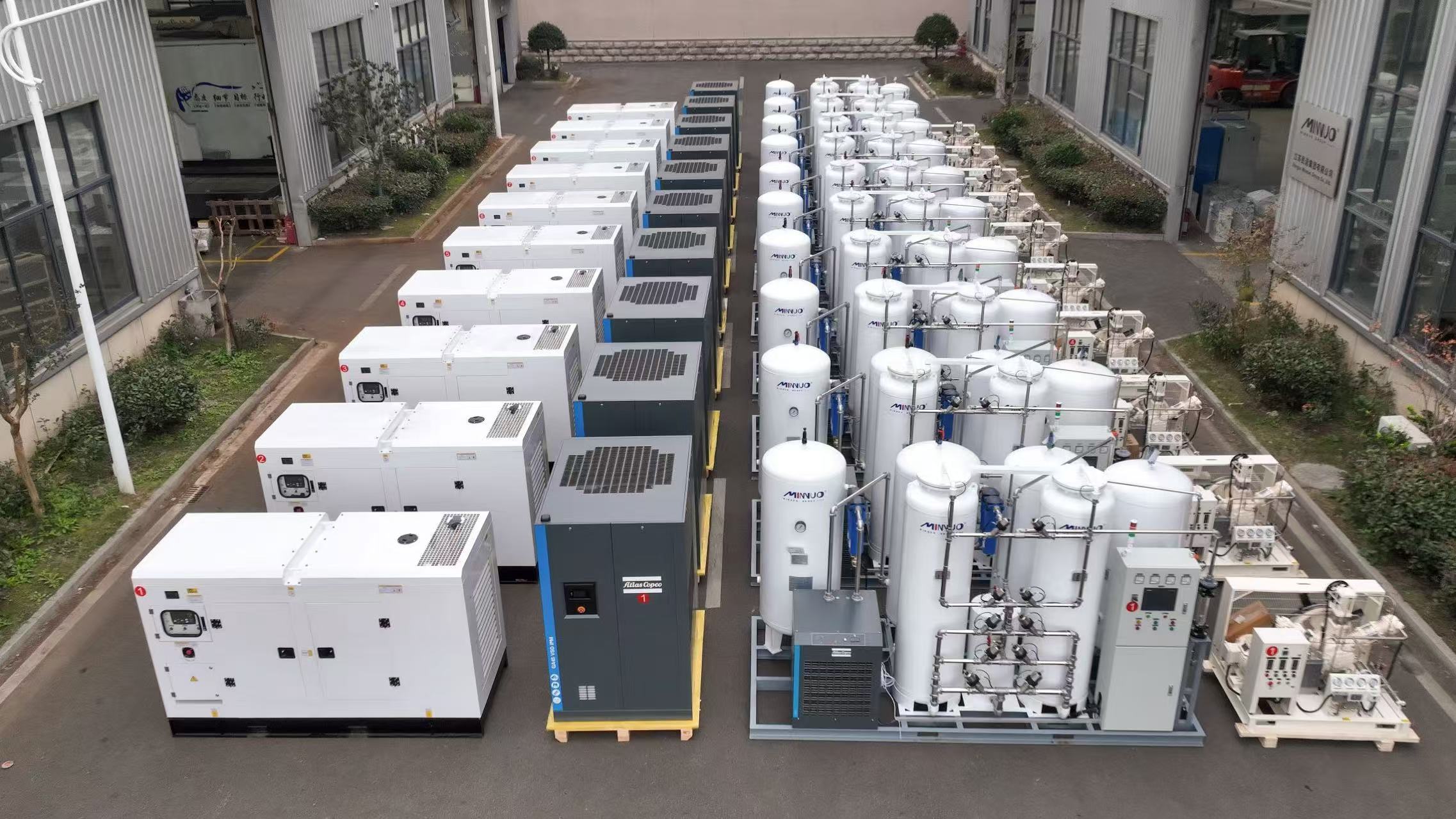
At MINNUO, we manufacture PSA oxygen plants for customers who are building oxygen supply businesses in markets around the world. We work with our clients to match the plant configuration — capacity, purity, containerization, and medical compliance features — to the specific demands of their target market. A PSA plant that is correctly specified becomes a productive asset that generates returns for a decade or more. The investment decision starts with an honest assessment of costs, revenues, and market realities. We provide the equipment and the engineering support to turn that assessment into a working oxygen supply business.

 sales2:+86 17506119168