
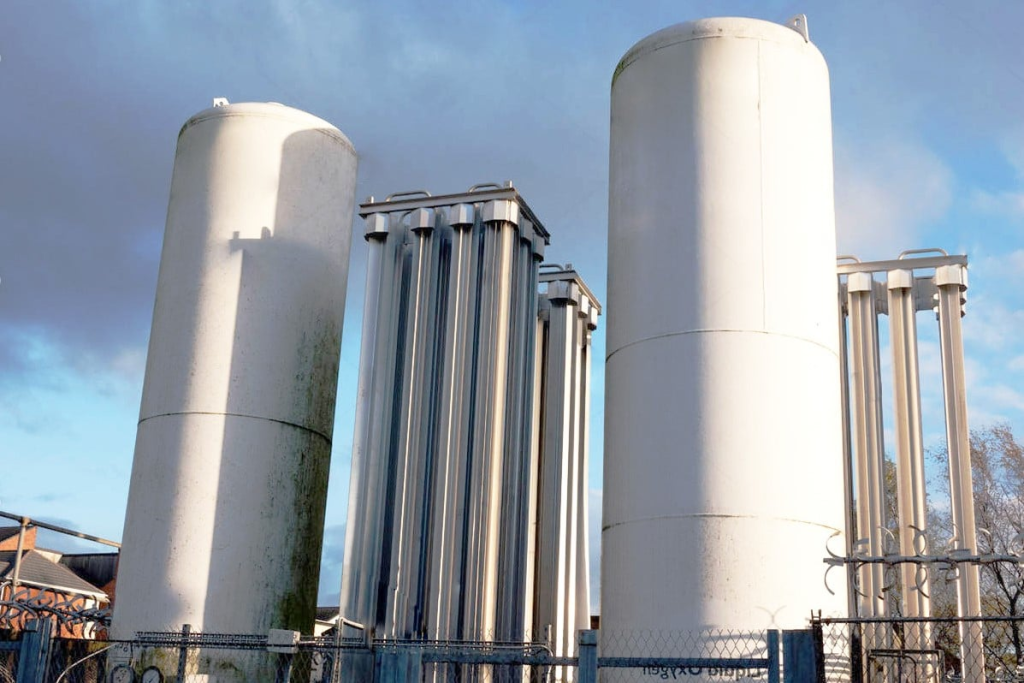
A PSA oxygen generator makes sense for a hospital. It makes sense for a gold mine. It makes sense for a fish farm. The case for on-site generation at small to medium scale is well established and getting stronger as the technology improves. But walk into a steel mill that produces five million tonnes of hot metal per year, or an ethylene oxide plant that consumes oxygen by the hundreds of tonnes per day, and the oxygen supply does not come from a bank of PSA modules. It comes from a cryogenic air separation unit — either on the other side of the fence or at the end of a pipeline — and it is stored on site as liquid oxygen in tanks the size of small buildings.
Why do the largest oxygen consumers stay with liquid oxygen when smaller users are switching to on-site generation? The answer is not inertia or lack of awareness. It is physics, economics, and operational logic working together at a scale that on-site PSA technology is not built to serve. This article explains why liquid oxygen remains dominant in steelmaking and large-scale chemical processing, and what would have to change for that dominance to shift.
I. The Scale of Oxygen Demand in Large Industry
How much oxygen a steel mill actually consumes
A basic oxygen furnace in an integrated steel mill blows oxygen through molten iron at supersonic speeds. The oxygen reacts with carbon, silicon, and phosphorus, removing these impurities and generating the heat that drives the refining process. A single BOF vessel processing 250 tonnes of hot metal consumes roughly 50 to 60 normal cubic meters of oxygen per tonne of steel produced. A mill with two BOF vessels producing 5 million tonnes of steel per year consumes approximately 300 million normal cubic meters of oxygen annually. That is an average of 35,000 Nm³ per hour, every hour, all year. An electric arc furnace, while smaller, still injects oxygen for decarburization, slag foaming, and post-combustion, consuming 30 to 50 Nm³ per tonne. A large EAF-based melt shop can consume 5,000 to 15,000 Nm³/h.
These flow rates are one to two orders of magnitude beyond the capacity of even the largest modular PSA systems. A standard industrial PSA oxygen plant tops out at around 500 Nm³/h for a single skid. You can parallel multiple skids, and some installations do reach 2,000 to 3,000 Nm³/h. But at 10,000 Nm³/h and above, the number of parallel PSA modules becomes impractical. The plot space, the interconnection complexity, the cumulative maintenance burden, and the energy consumption all work against the modular approach. Cryogenic air separation, which produces oxygen at thousands to tens of thousands of Nm³/h from a single cold box, is the technology that matches the scale of the demand.
Chemical plants: continuous, high-volume, and often co-located
Large chemical processes that consume oxygen — ethylene oxide production, gasification of coal or petcoke, partial oxidation of natural gas to synthesis gas, titanium dioxide pigment production — operate continuously. A gasifier or a chemical reactor running at 90-plus percent annual uptime needs an oxygen supply that matches that reliability. The flow rates are measured in hundreds or thousands of tonnes per day. A single large ethylene oxide plant can consume 2,000 to 4,000 tonnes of oxygen per day. These volumes are delivered by a dedicated air separation unit, either on site or nearby, with liquid oxygen storage as the buffer and backup. The oxygen is often delivered as gas at pipeline pressure, not as liquid, but the liquid storage and vaporization system is what provides supply security during ASU outages or maintenance.
II. Why Cryogenic Air Separation Wins at Scale
Energy efficiency at large scale
Cryogenic air separation becomes more energy-efficient as the plant size increases. A large modern ASU producing 3,000 to 5,000 tonnes of oxygen per day achieves a specific energy consumption of 0.3 to 0.4 kWh per normal cubic meter of oxygen — significantly better than the 0.4 to 0.6 kWh per Nm³ typical of PSA plants. The efficiency advantage comes from the thermodynamics of cryogenic distillation, which separates air by boiling point rather than by adsorption affinity, and from the economies of scale in compressor and turbine design. At the flow rates a steel mill requires, the energy cost differential between cryogenic and PSA is substantial. Over a year of continuous operation, the savings run into millions of dollars.
By-product value: argon, nitrogen, and rare gases
A cryogenic ASU does not just make oxygen. It also produces high-purity nitrogen, argon, and — in larger plants — the rare gases neon, krypton, and xenon. An integrated steel mill uses nitrogen for inerting, purging, and as a carrier gas. Argon is used for stirring in secondary steelmaking and as a shielding gas in welding. These by-products have economic value that offsets the cost of oxygen production. A PSA plant makes oxygen and nothing else. The nitrogen it vents is dilute. The argon goes with the nitrogen. For a large industrial user that can consume or sell the nitrogen and argon co-products, the cryogenic ASU provides a revenue stream that PSA cannot replicate.
Pipeline integration and supply reliability
A large ASU is typically connected to its customers by a dedicated oxygen pipeline. The pipeline operates at a steady pressure, fed directly by the ASU cold box, with liquid oxygen storage and vaporization providing backup. If the ASU trips, the liquid storage begins vaporizing automatically, and the pipeline pressure is maintained without interruption. This level of supply reliability — measured in minutes of unplanned downtime per decade — is engineered into the cryogenic supply chain. PSA systems, with their multiple moving parts, compressors, and switching valves, can also achieve high reliability, but the architecture of a bank of parallel modules does not match the inherent redundancy of a liquid storage and vaporization backup system fed by a single large cold box.
III. The Role of Liquid Oxygen in the Steelmaking Process
BOF and EAF oxygen injection: purity matters
The oxygen used in steelmaking does not need to be ultra-high purity. The BOF process operates with oxygen at 99.5 percent purity or better, not because the chemistry demands it but because the nitrogen that would be present in lower-purity oxygen dissolves in the molten steel and can cause nitrogen embrittlement in certain grades. Cryogenic ASU oxygen at 99.5 to 99.8 percent purity meets this requirement easily. PSA oxygen at 90 to 93 percent purity contains 7 to 10 percent argon and nitrogen. For BOF steelmaking, that nitrogen content is problematic. It increases the nitrogen pickup in the steel, which must then be removed by vacuum degassing — adding cost and time. For EAF steelmaking, the nitrogen pickup is less critical for many grades but still matters for high-quality flat-rolled products. The purity requirement, combined with the flow scale, makes cryogenic oxygen the default choice for primary steelmaking.
The oxygen lance and the physics of supersonic injection
The oxygen lance in a BOF delivers oxygen at supersonic velocity — typically Mach 2 to Mach 3 — to penetrate the slag layer and react with the molten metal bath. The lance design depends on a predictable gas density and a stable supply pressure. Liquid oxygen vaporization provides a rock-steady supply pressure, with the liquid acting as a massive capacitance buffer. PSA systems, with their cyclic pressure variations as columns switch between adsorption and regeneration, require additional buffering and pressure control to deliver the same stability. The technology gap is not unbridgeable, but the steel industry has optimized around the cryogenic supply model for decades, and the operational risk of changing that model is high relative to the potential savings.
IV. Chemical Plants: Where Purity, Pressure, and Scale Intersect
Partial oxidation and gasification: oxygen is a feedstock
In a gasification plant, oxygen is not a utility. It is a feedstock. The oxygen partially oxidizes a hydrocarbon or carbonaceous feed to produce synthesis gas — a mixture of carbon monoxide and hydrogen. The oxygen-to-feed ratio determines the syngas composition, the reactor temperature, and the yield of downstream products. This is a stoichiometric process. The oxygen flow must be accurate, stable, and of consistent purity. Cryogenic ASUs deliver this. The oxygen purity is high — typically 99.5 percent — and the supply pressure is matched to the gasifier injection pressure, which can be 30 to 80 bar. Compressing oxygen to these pressures from a low-pressure PSA output would add energy cost and complexity. The ASU cold box can be designed to deliver oxygen at the required pressure directly, reducing or eliminating the need for an oxygen compressor downstream.
Ethylene oxide and other direct oxidation processes
Ethylene oxide production reacts ethylene with oxygen over a silver catalyst. The process is exothermic and sensitive to the oxygen concentration in the reactor feed. Impurities in the oxygen — particularly hydrocarbons and sulfur compounds — poison the catalyst. The oxygen supply must be reliable enough that a supply interruption does not create a runaway reaction condition. Large ethylene oxide plants are typically built adjacent to or integrated with a cryogenic ASU, with liquid oxygen storage sized to sustain the plant through an ASU outage. The combination of purity requirements, reliability requirements, and flow scale makes on-site cryogenic supply the standard, with liquid storage as the contingency.
FAQ
Q1: Why don’t large steel mills use PSA oxygen generators instead of liquid oxygen?
A1: The primary reasons are scale, purity, and reliability. A large steel mill consumes 10,000 to 50,000 Nm³/h of oxygen — far beyond the practical capacity of modular PSA systems. The oxygen must be 99.5 percent or higher purity to avoid nitrogen pickup in the steel, while standard PSA delivers 90 to 93 percent purity. And the oxygen lance in a BOF requires a stable supply pressure that liquid oxygen vaporization with its massive inherent buffering provides more naturally than a PSA system with its cyclic operation.
Q2: At what oxygen consumption rate does cryogenic supply become more economical than PSA?
A2: The crossover point depends on local energy costs, liquid oxygen delivery distances, and the required purity. As a rough guideline, cryogenic ASUs begin to show an economic advantage over modular PSA at oxygen demands above approximately 1,000 to 2,000 Nm³/h of continuous flow, or about 30 to 60 tonnes per day. Below this range, PSA and VPSA systems are often more economical. Above 5,000 Nm³/h, cryogenic is almost always the lower-cost option when total cost of ownership is considered. The crossover shifts with electricity tariffs and liquid oxygen transport costs.
Q3: Can PSA oxygen be used in an electric arc furnace?
A3: Yes, and some EAF shops do use PSA or VPSA oxygen. The flow rates for a single EAF are lower than for a BOF — typically 2,000 to 8,000 Nm³/h — and the purity requirement is less stringent for many carbon steel grades. The nitrogen content of PSA oxygen (7 to 10 percent) can increase nitrogen pickup in the steel, which may require additional treatment for low-nitrogen grades. For stainless and specialty steel production, where nitrogen is tightly controlled, cryogenic oxygen remains the norm.
Q4: Why do chemical plants store liquid oxygen even when they have a pipeline supply?
A4: Liquid oxygen storage acts as the backup supply. If the pipeline supply is interrupted — due to an ASU trip, a pipeline valve closure, or scheduled maintenance — the liquid storage is vaporized and fed into the plant’s oxygen header automatically. The storage is typically sized for 24 to 72 hours of full-rate operation, giving the ASU operator time to restore supply. This backup function is critical for continuous chemical processes where an oxygen supply interruption can cause a shutdown that takes days to recover from.
Q5: What is the largest practical size for a PSA oxygen plant?
A5: Single-skid PSA plants are available up to about 500 Nm³/h. By paralleling multiple skids, installations can reach 2,000 to 3,000 Nm³/h. Beyond this, the number of parallel units — each with its own compressor, switching valves, and control system — becomes operationally complex and the total energy consumption trends higher than a single cryogenic ASU of equivalent capacity. For oxygen demands above 3,000 Nm³/h, cryogenic supply is generally preferred unless there is a specific reason to stay with PSA, such as a remote location with no liquid oxygen delivery infrastructure.
V. Where the Boundary Between PSA and Cryogenic Supply Is Shifting
VPSA is pushing into medium-scale territory
Vacuum pressure swing adsorption — VPSA — is a variant of PSA that uses a vacuum blower on the desorption side to improve oxygen recovery. VPSA plants are more energy-efficient than standard PSA at larger scales and are available in capacities up to 150 tonnes per day, roughly 5,000 Nm³/h, from a single process train. This pushes the economic crossover point between on-site generation and cryogenic supply higher than it was a decade ago. VPSA is becoming common in industries with oxygen demands in the 1,000 to 5,000 Nm³/h range — smaller steel mills, medium-scale chemical oxidation processes, and pulp and paper bleaching plants. The technology is not replacing cryogenic ASUs at the top end, but it is encroaching from below.
Hybrid models: cryogenic ASU with liquid backup plus PSA/VPSA for peak shaving
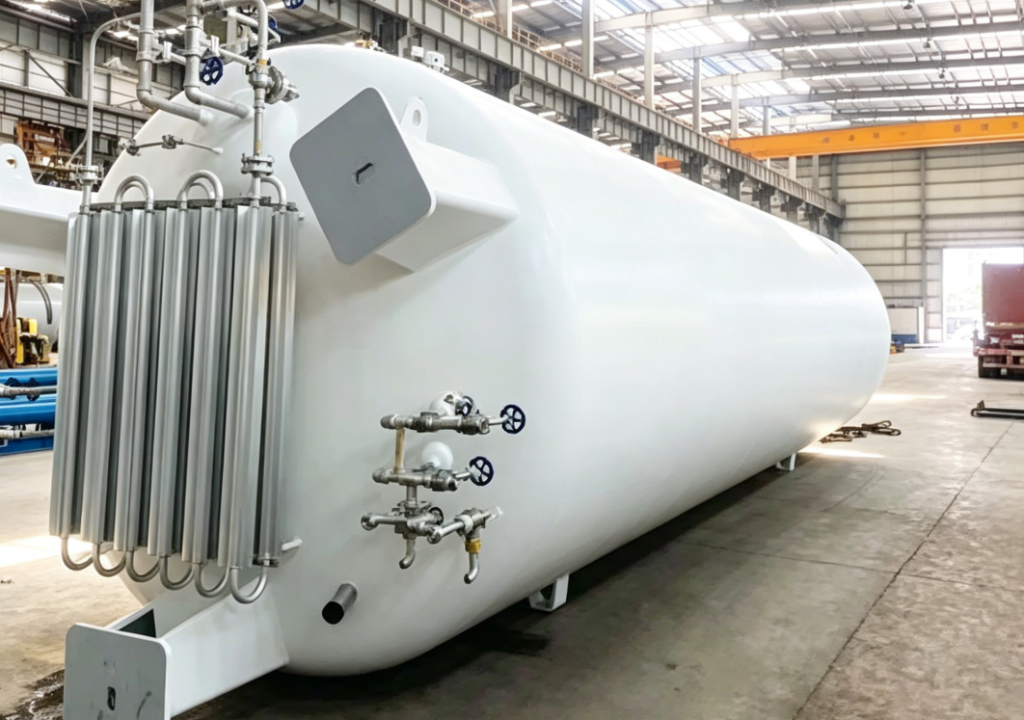
Some large industrial gas users and suppliers are deploying hybrid oxygen supply models. The base load is supplied by a cryogenic ASU, sized for slightly less than the maximum demand. Peak demand — which may occur for only a few hours per day or a few days per month — is met by vaporizing stored liquid oxygen or by running a smaller PSA or VPSA plant in parallel. This configuration allows the ASU to be sized for the efficient average load rather than the infrequent peak, reducing capital cost. The PSA or liquid storage handles the peaks. The hybrid model blurs the boundary between the two technologies and suggests that the future is not PSA versus cryogenic but PSA and cryogenic in a system designed for the specific load profile.
The role of renewable energy and intermittent operation
Cryogenic ASUs are most efficient when run continuously. They do not start and stop quickly. PSA and VPSA plants, by contrast, can start and stop in minutes. This makes them well suited to intermittent operation, which is becoming relevant as industrial plants integrate with variable renewable energy sources. A steel mill or chemical plant that wants to modulate its oxygen production to match low-cost renewable electricity windows may find a PSA or VPSA plant more compatible with that operating model than a cryogenic ASU. This is an emerging consideration, not yet a dominant one, but it points toward a future where the technology choice is influenced not just by steady-state economics but by the flexibility to operate in a dynamic electricity market.
VI. When Does a Steel Mill or Chemical Plant Choose PSA Over Liquid Oxygen?
Remote location with poor liquid oxygen logistics
A steel mill or chemical plant located far from an industrial gas pipeline network or an ASU — more than 300 to 500 kilometers — faces high liquid oxygen delivery costs. The transport cost per tonne can exceed the production cost. In these remote locations, on-site PSA or VPSA generation often becomes the economically preferred choice even at relatively large scales. The capital cost of the generation equipment is offset by the elimination of transport costs over the life of the installation.
Moderate total demand with variable consumption
A plant that needs 3,000 Nm³/h of oxygen but only runs three shifts, five days a week, is a different case from a plant that needs 10,000 Nm³/h continuously. The intermittent operation favors PSA or VPSA, because the plant can be shut down when not needed, avoiding the liquid oxygen boil-off losses and the inefficiency of operating a cryogenic ASU at part load. The total annual consumption, not just the instantaneous flow rate, determines the economic crossover.
Purity flexibility: when 90 to 93 percent is good enough
Some industrial oxygen applications do not require the 99.5 percent purity that cryogenic ASUs deliver. Glass furnaces, cement kilns with oxygen enrichment, certain non-ferrous smelting operations, and some chemical oxidation processes operate well with 90 to 93 percent oxygen. In these applications, the purity advantage of cryogenic supply is irrelevant, and the PSA or VPSA plant competes on energy cost and convenience alone. As PSA and VPSA technology improves in efficiency and reliability, more of these applications are switching to on-site generation.
Conclusion
Liquid oxygen remains the dominant oxygen supply mode for large steel mills and chemical plants because the scale of their demand is matched by the scale of cryogenic air separation. A single cold box producing thousands of tonnes of oxygen per day, delivering high purity at pipeline pressure, with liquid storage as a buffer against supply interruptions, is a system that has been optimized over decades of industrial practice. PSA and VPSA are not going to replace that system at the top end of oxygen demand. But they are encroaching from below as their efficiency improves and their capacity grows.
At MINNUO, we work with clients across the oxygen demand spectrum — from hospitals and aquaculture farms that run on PSA to industrial users who rely on cryogenic supply for their core processes. We understand the crossover points, the trade-offs, and the hybrid configurations that can deliver the best of both technologies. For a plant evaluating its oxygen supply options, the right answer is not always PSA and it is not always liquid. It is the system that delivers the required purity and flow at the lowest total cost over the life of the installation, with the reliability that the process demands. That is the analysis we help our clients perform.

 sales2:+86 17506119168