
The Invisible Killer of Wine: How Oxygen Destroys Meticulously Crafted Mellow Aroma
From grape picking, pressing and fermentation to aging, storage, bottling and sales, every stage of winemaking faces the fatal threat of oxygen intrusion. As an engineer with over 20 years of experience in the nitrogen generation equipment sector, I have witnessed countless wineries suffer losses due to oxidation issues. A premium winery’s Cabernet Sauvignon dry red wine suffered from insufficient sealing during aging, losing fruit aroma and darkening in color in just 3 months. The wine, originally priced at 800 yuan per bottle, was finally sold at a discounted price of 300 yuan, resulting in a direct loss of over one million yuan.
Oxygen causes comprehensive and irreversible damage to wine:
- During fermentation, excessive oxygen breeds harmful bacteria, impairs yeast activity, and produces off-flavors such as vinegar and moldy odors.
- During aging, oxygen accelerates the oxidation and polymerization of tannins, making the wine rough and bitter while losing its delicate taste.
- During bottling and storage, headspace oxygen in bottles triggers oxidation and browning of the wine, shortening its shelf life.
Data shows that wine without nitrogen protection has a shelf life of only 6–12 months, while nitrogen-protected wine can extend its shelf life to 3–5 years, and high-end wine can even achieve aging potential of over 10 years.
Nitrogen has become the “freshness guardian” of the wine industry thanks to its chemical inertness: it does not react with wine at room temperature and pressure, is colorless, odorless and residue-free, perfectly isolating oxygen without affecting the flavor and quality of wine. Compared with carbon dioxide, nitrogen has a slightly higher density than air, enabling more thorough oxygen displacement in containers without generating bubbles that affect wine clarity. Compared with argon, nitrogen is widely available and more cost-effective, suitable for full-process applications.
In world-renowned producing areas such as Bordeaux, France and Tuscany, Italy, nitrogen protection has become a standard process for high-end wineries. The penetration rate of nitrogen application in first-tier domestic wineries has risen from 45% in 2020 to 78% in 2025. Nitrogen freshness locking has become a key driver for wine quality upgrading.
Fatal Shortcomings of Traditional Gas Supply Modes: Why Wineries Fall into the Dilemma of Quality and Cost
Although the importance of nitrogen protection is widely recognized in the industry, most wineries still rely on outsourced bottled or liquid nitrogen. This traditional model has three core pain points that restrict winery development:
High Costs, Heavy Long-Term Burden
Take a medium-sized winery with an annual output of 100 tons of wine as an example. The annual nitrogen consumption from fermentation, aging to bottling is about 8,000 Nm³. The unit price of outsourced bottled nitrogen is 12–15 yuan/Nm³, with an annual cost of 96,000–120,000 yuan; liquid nitrogen (8–10 yuan/Nm³) costs 64,000–80,000 yuan per year. Adding transportation, storage, cylinder deposits and losses (10%–15% loss rate for bottled nitrogen, 0.3%–0.8% daily evaporation loss for liquid nitrogen), the actual annual cost increases by 20%–30%. High-end wineries may spend over 500,000 yuan annually on high-purity nitrogen, a heavy burden for small and medium-sized wineries with limited profit margins.
Fluctuating Purity, Hidden Quality Risks
Different wine production stages have distinct nitrogen purity requirements: over 99.5% for fermentation, over 99.9% for aging, and over 99.99% high-purity nitrogen for bottling headspace displacement. Outsourced nitrogen has a fixed purity, forcing wineries to either buy high-purity nitrogen for high-end processes (wasting costs) or risk wine oxidation due to insufficient purity. One winery suffered from oxidized off-flavors in 10 tons of aging wine due to outsourced nitrogen purity of only 98.8%, with a direct loss of over 800,000 yuan. Worse, purity may fluctuate during transportation and storage due to cylinder leaks or pipeline contamination, posing huge risks to quality control.
Unstable Supply, High Risk of Production Interruption
Outsourced nitrogen is affected by transportation distance, weather, supplier capacity and other factors, leading to frequent supply disruptions. A mountainous winery suspended bottling production for 2 days due to road collapses from heavy rain, missing order delivery and paying 150,000 yuan in liquidated damages. During the peak winemaking season (September–December annually), suppliers face tight capacity, requiring wineries to book nitrogen 1–2 months in advance, often facing price hikes and delayed deliveries that severely disrupt production plans. In addition, bottled nitrogen requires manual handling and replacement, and liquid nitrogen storage tanks need professional maintenance, occupying storage space and increasing labor management costs.
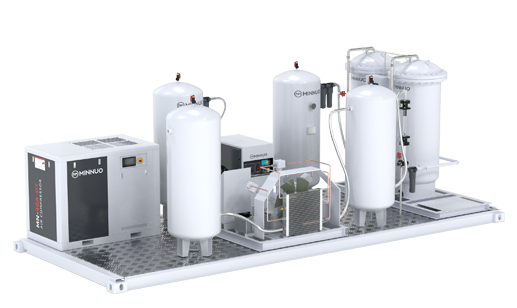
MINNUO PSA Nitrogen Generator: The On-Site Nitrogen Generation Revolution for the Wine Industry
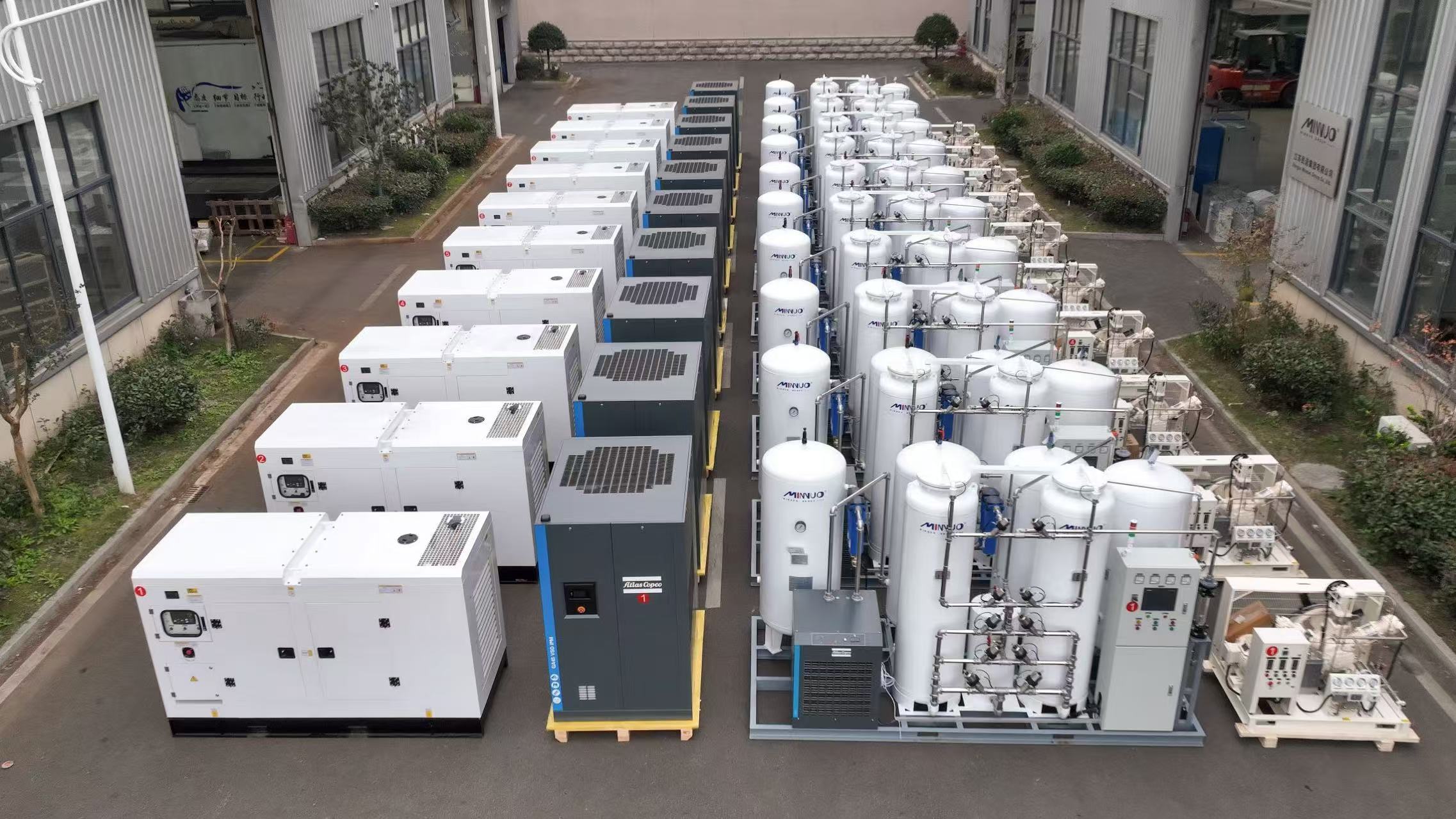
Targeting the pain points of traditional gas supply modes, Jiangsu MINNUO Group, with over 20 years of R&D experience in air separation equipment, has launched a customized PSA (Pressure Swing Adsorption) nitrogen generator for the wine industry. With core advantages of on-site generation, on-demand production, high purity and stability, it provides a full-process nitrogen solution for wineries, completely restructuring the gas supply logic of the wine industry.
Core Technology: Precisely Adapt to Full-Process Wine Production Needs
MINNUO PSA nitrogen generators adopt food-grade PSA technology, using air as raw material to quickly separate nitrogen and oxygen at room temperature and pressure via high-quality carbon molecular sieve selective adsorption. Its core advantages directly address winery pain points:
- Adjustable precision purity: Nitrogen purity can be flexibly adjusted between 95%–99.999%, perfectly matching each wine production stage: 99.5% purity for fermentation to isolate bacteria, 99.9% purity for aging to delay oxidation, 99.99% purity for bottling to displace headspace oxygen, ensuring stable quality at every step. Equipped with an online purity detection system, it displays real-time purity data with an error ≤±0.01%, complying with food-grade nitrogen safety standards.
- Ultra-low dew point, residue-free: Nitrogen dew point ≤-70℃, effectively preventing moisture from entering wine and affecting flavor, avoiding turbidity and precipitation, especially suitable for high-humidity producing areas or underground cellars.
- Efficient and flexible gas production: The equipment produces qualified nitrogen within 10 minutes of startup without preheating, meeting batch production needs. Gas production capacity is 5–500 Nm³/h per unit, flexibly adapting to small premium wineries (50 tons/year) to large wineries (500 tons/year), supporting simultaneous gas supply to multiple stations.
Cost Advantage: From “Purchasing Gas” to “Generating Gas from Air”, 60%–80% Annual Savings
The core competitiveness of MINNUO PSA nitrogen generators is breaking the cost shackles of outsourced nitrogen. The equipment converts free air into high-purity nitrogen with minimal power consumption, with a comprehensive cost of only 0.25–0.4 yuan/Nm³: 81% cheaper than bottled nitrogen, 73% cheaper than liquid nitrogen, and up to 85% savings for high-purity nitrogen scenarios.
For a 100-ton/year medium winery, annual nitrogen cost drops to 3,600 yuan (based on 22 Nm³/day, 0.35 yuan/Nm³), saving 116,400 yuan/year vs. bottled nitrogen and 80,400 yuan/year vs. liquid nitrogen. Equipment investment is recoverable within 1.5 years, followed by long-term “zero raw material cost” gas production. Additionally, no transportation, storage, cylinder deposits or evaporation losses are required; fully automatic operation needs no dedicated staff, saving an extra 20,000–30,000 yuan/year in labor and management costs. A premium winery saved over 150,000 yuan/year on one bottling line after using MINNUO generators, while reducing oxidation-related wine loss by 80%.
Stable Supply: 24/7 Uninterrupted Production, No Supply Disruption Anxiety
MINNUO PSA nitrogen generators feature a “plug-and-play” modular design for 24-hour continuous gas production, producing on demand and completely independent of external supply chains. Equipped with a PLC intelligent control system, it monitors key parameters (purity, pressure, flow) in real time and automatically activates compensation for fluctuations; if purity falls below the set value, it triggers an audible and visual alarm and automatically discharges unqualified gas to ensure wine safety.
For special winery scenarios, MINNUO provides diverse equipment types:
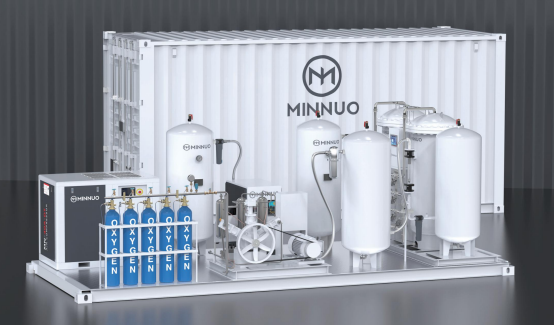
- Skid-mounted type: Compact, suitable for space-limited underground cellars.
- Mobile type: With rollers, flexible for switching between fermentation tanks, wine barrels, bottling machines.
- Explosion-proof type: Complies with winery safety standards, suitable for alcohol environments.
Stable and reliable nitrogen supply is guaranteed for wineries in remote mountainous or urban areas, eliminating production interruptions and quality risks from supply disruptions.
Food-Grade Safety: Full-Process Compliance, Guaranteed Quality
MINNUO PSA nitrogen generators strictly follow food industry safety standards. All parts in contact with nitrogen are made of 304 stainless steel, easy to clean without dead corners to prevent bacterial growth, complying with GMP certification. The equipment has passed ISO9001 quality system certification and food contact material safety certification. Nitrogen products can pass third-party testing, with purity, dew point, impurity content and other indicators meeting GB 29202-2012 Food Additive – Nitrogen, ensuring residue-free wine safety.
In addition, the generator produces no waste emissions during operation, with noise ≤75dB, no impact on winery environment or wine aging, supporting green production in line with carbon neutrality policies.
Scientific Selection Guide for Winery Nitrogen Generators: Avoid Misunderstandings, Precise Matching
As a professional engineer, I find most wineries make mistakes in nitrogen generator selection: blindly pursuing high purity, only focusing on purchase price, ignoring capacity matching. Based on wine production characteristics, five key selection principles are as follows:
Purity Matching: Choose On Demand, Avoid Blindly High Purity
- Fermentation: 99.5%–99.8% purity is sufficient; higher purity increases costs.
- Aging: 99.9% purity to delay oxidation and retain flavor compounds.
- Bottling: Over 99.99% high-purity nitrogen to reduce headspace oxygen to below 1%.
- High-end/sparkling wine: Over 99.995% purity for long-term aging stability.
MINNUO generators support customized purity, flexible adjustment according to winery positioning and process needs to avoid cost waste.
Gas Production Calculation: Reserve Margin, Avoid Insufficient Capacity
Accurately calculate total nitrogen demand before selection:
Total nitrogen demand = nitrogen demand of each stage × 1.2 (20% reserved margin)
- Fermentation tank inerting: 0.8–1 Nm³/h per 10m³ fermentation tank.
- Wine barrel displacement: 0.05 Nm³ per 50L barrel per displacement.
- Bottling headspace displacement: 0.002–0.003 Nm³ per 750ml bottle.
- Production line purging: 5–10 Nm³/h per bottling line.
Example: A 100-ton/year winery has a peak nitrogen demand of ~15 Nm³/h, so a 20 Nm³/h generator is recommended to meet current needs and reserve space for future capacity expansion.
Energy Consumption Control: Calculate Long-Term Costs, Reject “Low-Price Traps”
Equipment purchase price accounts for only 20% of life-cycle costs, while energy consumption accounts for 60%. MINNUO generators have energy consumption as low as 0.3kW·h/Nm³, 40% more energy-efficient than the industry average, with annual energy costs only 1/5 of outsourced nitrogen. Focus on energy-saving parameters during selection to avoid low-cost, high-energy-consumption equipment. One winery bought a cheap generator with 0.8kW·h/Nm³ energy consumption, paying three times more annual energy costs than MINNUO equipment—extra expenses exceeded the price difference within 2 years.
Stability and Safety: Downtime Losses Exceed Equipment Costs
Winemaking is continuous; nitrogen generator downtime may cause wine oxidation and heavy losses. MINNUO generators operate 12,000 hours without failure, annual failure rate ≤0.3%, equipped with PLC + IoT remote monitoring for real-time status checks and early fault warnings. For alcohol environments, explosion-proof design with ventilation warning devices is available, complying with Guidelines for Safety Management of Hazardous Chemicals Use in Industrial and Trade Enterprises, eliminating suffocation and explosion risks.
Service Support: Full-Life-Cycle Support, Worry-Free After-Sales
Installation, commissioning and operation directly affect performance. MINNUO provides full-process services:
- Pre-sales: Free on-site survey and customized solutions.
- During sales: Free on-site installation, commissioning and professional operator training.
- After-sales: 7×24-hour technical support; 2-hour response in Jiangsu, Zhejiang and Shanghai, 48-hour on-site maintenance nationwide.
Core components have extended warranties: 10-year molecular sieve warranty, 20-year main valve warranty, far exceeding the industry average, completely solving winery worries.
Practical Cases: MINNUO PSA Nitrogen Generators Empower Winery Quality Upgrading
Case 1: Premium Winery Aging Freshness — Annual Savings of 150,000 Yuan, Wine Rating Up 15%
A Shandong premium winery produces 80 tons of high-end dry red wine annually, previously using bottled nitrogen with an annual cost of 180,000 yuan, and 30% of aging wine suffered mild oxidation due to purity fluctuations. After introducing a 15 Nm³/h MINNUO generator in 2024:
- Cost reduction: Comprehensive nitrogen cost 0.32 yuan/Nm³, annual total cost only 9,200 yuan, saving 170,800 yuan/year; equipment investment recovered in 10 months.
- Quality improvement: Stable 99.99% nitrogen purity, wine oxidation rate during aging dropped below 1%, finer tannins, richer fruit aroma, wine rating increased by 15% at tastings, price raised from 680 yuan to 880 yuan per bottle.
- Efficiency improvement: Fully automatic operation, no cylinder replacement, bottling line effective working time increased by 10%, annual capacity up 15%.
Case 2: Large Winery Bottling Line — Shelf Life Doubled, Qualified Rate 99.9%
A large Ningxia winery produces 500 tons of wine annually with 3 bottling lines, previously using liquid nitrogen with an annual cost of 450,000 yuan, and frequent production halts due to transportation delays. After introducing 3 MINNUO 50 Nm³/h generators (dual parallel + backup) in 2023:
- Stable supply: 24/7 continuous gas production, no supply disruption, no annual production downtime losses.
- Stable quality: Bottling headspace oxygen below 0.5%, wine shelf life extended from 1 year to 3 years, high-end series up to 8 years aging potential, product qualified rate from 98.2% to 99.9%.
- Comprehensive savings: Annual nitrogen cost only 48,000 yuan, saving 402,000 yuan/year vs. liquid nitrogen, plus 50,000 yuan/year labor cost reduction; single line annual comprehensive revenue up 600,000 yuan.
Case 3: Sparkling Wine Custom Solution — Precise Pressure Control, Purer Flavor
A Zhejiang sparkling wine winery needed nitrogen pressurization without affecting bubble fineness, previously facing high costs and unstable pressure with outsourced high-purity nitrogen. MINNUO provided a customized “PSA nitrogen generator + precise pressure regulation system” with 99.995% purity and stable pressure 0.3–0.5Mpa:
- Process adaptation: Pressure fluctuation ≤±0.01Mpa, uniform bubble formation, finer taste, products certified to EU sparkling wine standards.
- Cost savings: Annual nitrogen cost from 220,000 yuan to 35,000 yuan, 84% savings.
- Flexible control: Real-time adjustment of nitrogen pressure and flow for different sparkling wine types, adapting to multi-variety production.
Conclusion: Nitrogen Freshness Lock, Building a Mellow Future Together
Wine quality originates from terroir, matures in brewing craftsmanship, and is preserved by freshness-locking technology. Jiangsu MINNUO PSA nitrogen generators, with core advantages of on-site generation, high purity and stability, cost control, safety and compliance, provide a convenient “air-to-nitrogen” solution for full-process wine production. It breaks the cost and quality shackles of traditional gas supply, and injects strong impetus into winery quality upgrading and sustainable development.
From fermentation tank inerting protection, aging care in wine barrels to headspace displacement on bottling lines, MINNUO nitrogen generators have empowered over 200 wineries nationwide to reduce costs and improve efficiency, locking the pure flavor of every drop of wine with technology. As an engineer of Jiangsu MINNUO, we firmly believe: excellent nitrogen generation equipment is not only a production tool, but also a “quality guardian” and “cost optimizer” for wineries.
If you are still troubled by high costs of outsourced nitrogen, anxious about quality risks from purity fluctuations, or stressed by production pressure from supply interruptions, choose Jiangsu MINNUO PSA nitrogen generators. Let us escort your wine business with professional technology, reliable products and attentive services, and brew mellow fine wines that stand the test of time!
FAQ (Frequently Asked Questions)
1. Why use nitrogen for wine instead of CO₂ or air?
Nitrogen is inert, odorless, and does not dissolve or react with wine. It displaces oxygen thoroughly without altering taste or clarity, making it the best choice for wine protection.
2. What nitrogen purity do I need for winemaking?
Fermentation: 99.5%+; Aging: 99.9%+; Bottling: 99.99%+. MINNUO generators support 95%–99.999% adjustable purity.
3. How much can I save with on-site nitrogen generation?
On-site nitrogen costs only 0.25–0.4 yuan/Nm³, 60%–85% lower than bottled or liquid nitrogen. Most wineries recover investment in 1–2 years.
4. Is the MINNUO generator easy to operate and install?
It is fully automatic, starts within 10 minutes, and needs no dedicated operators. Compact and skid‑mounted models fit small cellars; installation is quick and non-disruptive.

 sales2:+86 17506119168