
Mushrooms breathe. Unlike green plants that produce oxygen through photosynthesis, fungi consume oxygen and release carbon dioxide just as animals do. In the confined environment of a commercial mushroom house, the respiration of millions of rapidly growing fruiting bodies can deplete oxygen and elevate carbon dioxide to levels that suppress growth, reduce quality, and ultimately destroy the crop. Traditional ventilation addresses this by exchanging the entire room atmosphere, but at a cost: heat loss in winter, cooling load in summer, and the constant risk of contamination from outside air. A new approach, adapted from industrial gas technology, is gaining attention. By injecting pure oxygen directly into cultivation rooms, growers can maintain optimal atmospheric conditions independent of ventilation rate, increasing yields, shortening crop cycles, and reducing energy costs.
I. The Respiratory Reality of Commercial Mushroom Cultivation
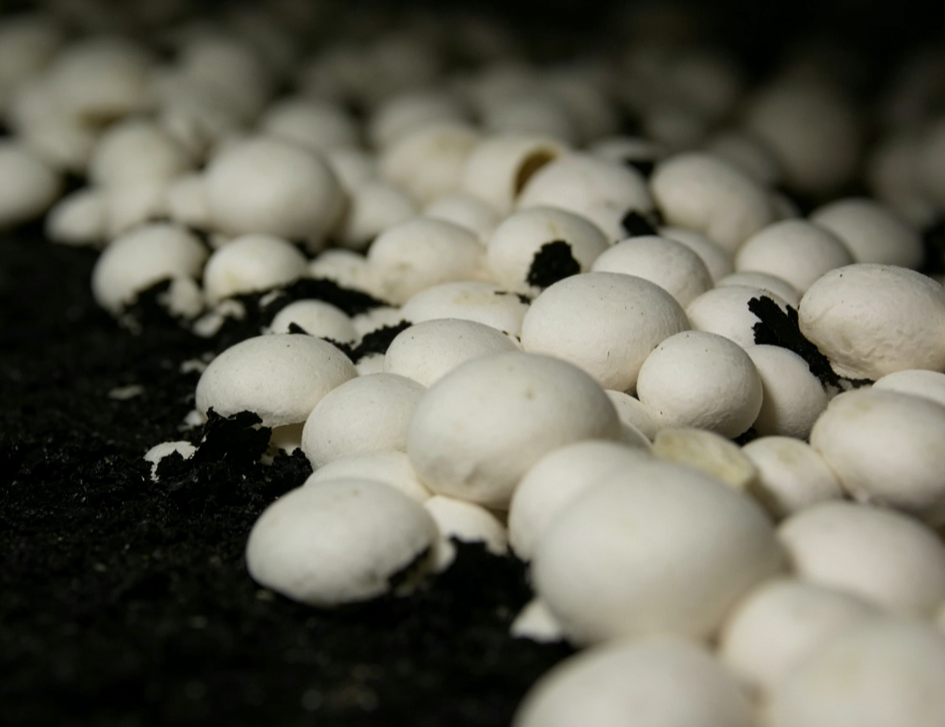
A mushroom house is a biological reactor on an industrial scale. The substrate—compost, straw, wood chips, or grain—is colonized by fungal mycelium that digests organic matter through oxidative metabolism. The mycelium consumes oxygen and produces carbon dioxide continuously, at rates that increase dramatically when fruiting begins.
The oxygen demand varies by species and growth phase. During spawn run, when the mycelium colonizes the substrate, oxygen consumption is moderate but critical—insufficient oxygen slows colonization and leaves the substrate vulnerable to competitor molds. During pinning and fruiting body development, oxygen demand peaks. A commercial Agaricus bisporus farm producing 10,000 kilograms of mushrooms per day consumes approximately 3,000 to 5,000 kilograms of oxygen daily at peak production. This oxygen must be continuously supplied to the growing rooms.
Carbon dioxide accumulation is the mirror image of oxygen consumption. As mushrooms respire, CO₂ concentration in the room rises. Elevated CO₂ affects mushroom morphology and development in ways that directly impact market value. In Agaricus, CO₂ above 1,000 parts per million reduces cap expansion, producing the closed-cap mushrooms preferred for some markets but suppressing overall yield. In Pleurotus, CO₂ above 2,000 parts per million causes elongated stems and small caps, producing mushrooms that are visually unappealing and difficult to package. In Lentinula edodes, also known as shiitake, elevated CO₂ suppresses cap development entirely. Every species has a CO₂ tolerance threshold, and exceeding that threshold means lost revenue.
II. The Limitations of Conventional Ventilation
Ventilation is the traditional method for maintaining oxygen and CO₂ levels in mushroom houses. Fresh outdoor air is drawn into the growing room and stale, CO₂-laden air is exhausted. The system works, but it is inherently inefficient.
The air that enters the growing room must be conditioned. In winter, the incoming cold air must be heated to the temperature required for mushroom growth, typically 16 to 22 degrees Celsius depending on the species and phase. In summer, the incoming warm air must be cooled. The energy cost of conditioning ventilation air is substantial and rises with the ventilation rate. A mushroom farm that exchanges room air 10 times per hour to maintain CO₂ within limits may spend more on heating and cooling than on any other single operating cost except substrate.
Ventilation air must be filtered to prevent the entry of competitor fungi, bacteria, and insects that can devastate a crop. Higher ventilation rates mean larger filter banks, more frequent filter replacement, and higher fan energy consumption. The filtration requirement is not optional. Trichoderma and other competitor molds are ubiquitous in outdoor air, and a single contamination event can spread through a mushroom house with devastating speed.
Ventilation also disrupts the humidity control that is essential for proper mushroom development. The incoming air is drier than the saturated atmosphere required in the growing room, so humidification systems must work harder as ventilation increases. The energy cost of water vaporization adds to the heating and cooling burden.
There is a fundamental trade-off in ventilation-dependent cultivation. The grower must exchange enough air to maintain safe oxygen and CO₂ levels. The more air exchanged, the more energy consumed. The less air exchanged, the more crop development is suppressed by CO₂. Each grower finds a compromise point, and that compromise point almost always represents a production level below what the crop could achieve if CO₂ were controlled independently of ventilation.
III. How Oxygen Injection Changes the Ventilation Equation
Oxygen injection breaks the link between CO₂ control and ventilation rate. The grower can reduce ventilation to the minimum required for temperature and humidity management and inject oxygen independently to maintain the required atmospheric composition. The two variables that were previously coupled become independently controllable.
The principle is straightforward. Pure oxygen, typically 90% to 93% purity from a PSA generator, is injected into the growing room through a distribution manifold. The oxygen mixes with the room air, raising the oxygen concentration and compensating for the respiratory consumption of the crop. CO₂ continues to be removed by ventilation, but the ventilation rate can now be set based on CO₂ removal requirements alone, without concern for whether the reduced airflow is supplying enough oxygen.
The practical impact is significant. A grower who previously needed eight to twelve air changes per hour to maintain both oxygen and CO₂ within limits may now achieve the same CO₂ control with four to six air changes per hour because the oxygen demand is satisfied independently. The reduction in ventilation cuts heating, cooling, humidification, and filtration costs roughly in half. The energy savings alone can justify the oxygen system investment, with the production benefits adding to the return.
The oxygen concentration in the growing room is maintained at or slightly above ambient levels, typically 20% to 22%. This is well below any safety concern—the oxygen level that significantly increases fire risk is above 23%—but sufficiently above ambient to compensate for crop respiration between air exchanges. The oxygen injection rate is modulated based on continuous oxygen monitoring to maintain the target concentration.
IV. Production Benefits Beyond Energy Savings
The economic case for oxygen injection extends beyond utility savings. The production benefits are measurable and, for many growers, more valuable than the energy reduction.
CO₂ control improves crop quality and uniformity. By maintaining CO₂ at optimal levels rather than the elevated levels tolerated under ventilation-only operation, the grower produces mushrooms with the cap size, stem length, and overall appearance that the market prefers. The improvement in quality translates to higher price per kilogram for fresh-market sales, or higher yield of the premium grades for processed products.
Crop cycle time shortens when oxygen and CO₂ are maintained at optimal levels throughout the production cycle. Spawn run completes faster. Pinning initiates sooner. Fruiting bodies develop to harvestable size in fewer days. For a farm producing multiple flushes or cycles per year, a reduction in cycle time of even one or two days per flush increases annual throughput and revenue from the same growing infrastructure.
The reduction in ventilation reduces the influx of airborne contaminants. Every cubic meter of outdoor air brought into the growing room carries a load of fungal spores, bacteria, and particulates that challenge the crop’s defenses and the grower’s sanitation protocols. Reducing ventilation by half reduces the contaminant challenge by half. The result is fewer disease outbreaks, reduced pesticide use, and more consistent crop performance.
V. PSA Oxygen Generation for the Mushroom Farm
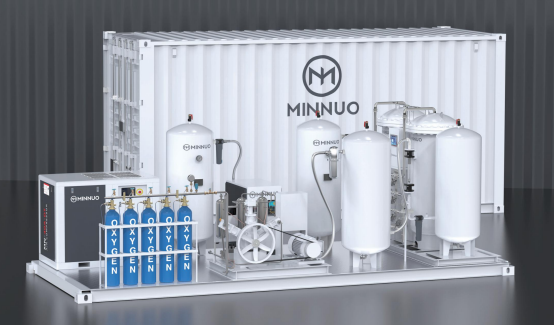
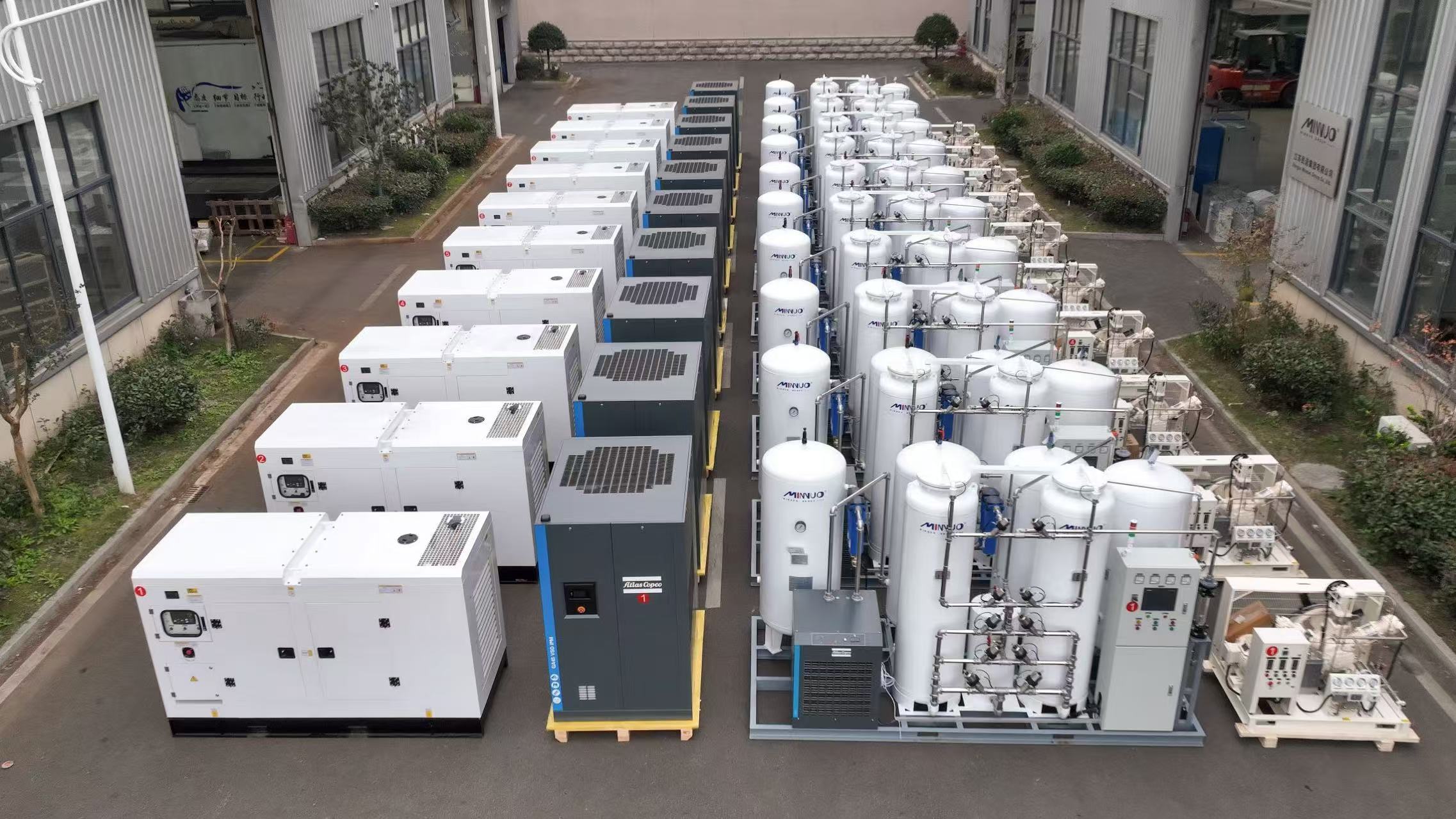
On-site PSA oxygen generation is the economic choice for commercial mushroom operations consuming oxygen on a continuous basis. The technology is identical to the PSA systems used in industrial applications, scaled and configured for agricultural service.
The oxygen demand for a mushroom farm is modest compared to industrial applications. A medium-scale Agaricus farm producing 5,000 kilograms per day requires approximately 20 to 40 normal cubic meters of oxygen per hour. This is well within the capacity range of standard PSA oxygen generators. Larger farms with multiple growing rooms may require proportionally more oxygen, up to 100 or 150 normal cubic meters per hour for major production facilities.
PSA oxygen purity of 90% to 93% is more than adequate for mushroom cultivation. The residual gas is primarily argon with some nitrogen, both of which are biologically inert and are present in normal air at far higher concentrations than they will reach in the growing room. Higher purity provides no cultivation benefit and costs more to produce.
The oxygen is delivered to the growing rooms at low pressure, typically 1 to 3 bar, through food-grade or agricultural-grade piping. Stainless steel tubing or oxygen-compatible plastic piping distributes the oxygen to each room, where a flow control valve modulates the injection rate based on the room’s oxygen monitor. The distribution system is simple compared to industrial oxygen installations, with lower pressures and flow rates.
VI. Implementation and Safety
Installing oxygen injection in an existing mushroom farm is straightforward. The PSA oxygen generator is installed in a utility area adjacent to or near the growing rooms. Oxygen distribution piping runs to each room, with a flow control valve and injection point in each room’s air circulation system. An oxygen monitor in each room provides the feedback signal for injection rate control.
The existing ventilation system remains in place and continues to operate, but at reduced airflow rates determined by CO₂ removal requirements. The ventilation is controlled by CO₂ monitors in each room, with variable-speed fans that adjust airflow to maintain the CO₂ setpoint. The oxygen and CO₂ control loops operate independently, with their setpoints established based on the specific species and growth phase.
Safety considerations for agricultural oxygen injection are modest. The oxygen concentration in the growing room is maintained below 23%, the threshold cited by safety standards for increased fire hazard. The oxygen distribution system pressure is low, typically 1 to 3 bar, far below the pressures used in industrial oxygen service. The oxygen generator and distribution piping are installed according to standard compressed gas safety practices, including proper materials of construction, cleaning for oxygen service, and separation from combustible materials.
Personnel training should address the specific hazards of oxygen-enriched atmospheres. Workers must understand that oxygen supports combustion and that materials that are difficult to ignite in air become flammable in elevated oxygen. Standard mushroom farm personal protective equipment and hygiene protocols continue to apply.
FAQ
Q1: What oxygen purity does mushroom cultivation require?
Oxygen purity of 90% to 93%, as produced by a standard PSA oxygen generator, is adequate for mushroom cultivation. The residual argon and nitrogen are biologically inert. Higher purity provides no measurable benefit and costs significantly more.
Q2: Will oxygen injection increase my fire risk?
When the oxygen concentration in the growing room is maintained at 20% to 22%, the fire risk is not measurably different from a room ventilated with normal air at 20.9% oxygen. The risk increases only when oxygen concentration exceeds 23%, and the control system prevents this by modulating the oxygen injection rate based on continuous monitoring.
Q3: How much does a PSA oxygen system for a mushroom farm cost?
A PSA oxygen generator sized for a medium-scale mushroom farm consuming 20 to 40 normal cubic meters of oxygen per hour typically costs $40,000 to $80,000 installed, including the generator, compressor, dryer, and distribution system. The investment is typically recovered within two to three years through the combination of energy savings and production improvements.
Q4: Can oxygen injection be used with all mushroom species?
Yes. The basic respiratory physiology of all cultivated mushroom species responds similarly to oxygen and CO₂. The optimal CO₂ setpoint and oxygen injection rate vary by species and growth phase, but the technology is applicable across all commercial mushroom types, including Agaricus, Pleurotus, Lentinula, and specialty mushrooms.
Q5: Does oxygen injection affect mushroom flavor or nutrition?
No. Oxygen injection affects the growing environment, not the mushroom metabolism. The mushrooms themselves are not altered in any detectable way compared to mushrooms grown under ventilation-only conditions, except for improved morphology from better CO₂ control.
Q6: How quickly can I convert my existing mushroom farm to oxygen injection?
The installation can typically be completed between crop cycles, in one to two weeks. The oxygen generator is installed during the current crop, and the distribution piping and monitoring are connected to each room during the break between crops. The system is commissioned and ready for the next crop cycle.
Conclusion
Mushroom cultivation is a biological process that depends on precise atmospheric control. Conventional ventilation, while effective, couples oxygen supply to CO₂ removal and forces growers to compromise between production optimization and energy cost. Oxygen injection decouples these variables, enabling independent control of oxygen and CO₂ for optimal crop development at reduced ventilation rates. The result is higher yield, better quality, shorter cycles, and lower energy costs. On-site PSA oxygen generation provides the oxygen supply at a cost that makes the economic case for injection clear for commercial mushroom farms.
At MINNUO, our PSA oxygen generators are configured for the unique requirements of agricultural applications, including mushroom cultivation. Our systems deliver the oxygen purity, flow rate, and pressure required for growing room injection, with automated control systems that integrate with your existing environmental management infrastructure. Whether you are operating a single growing facility or a multi-site mushroom production enterprise, MINNUO provides the reliable on-site oxygen supply that supports your crop production goals. Every MINNUO system includes commissioning support, safety documentation, and ongoing technical assistance.


 sales2:+86 17506119168