
Direct answer: Cylinders usually deserve first consideration for low, intermittent demand. On-site PSA usually has the lower long-run unit cost at stable medium-to-high utilization. Bulk liquid nitrogen is often stronger for high peaks, very high purity, or processes that also need cryogenic liquid. Compare all three at the same purity, pressure, backup autonomy, and annual volume using risk-adjusted TCO.
Why Purchase Price per Cylinder or Liter Is Not Enough
The three supply modes use different billing units, lose gas in different places, and expose the plant to different failure modes. Cylinders are billed by cylinder or pack, liquid nitrogen by liter, kilogram, or delivery, and PSA shifts cost into compressed air, electricity, maintenance, and capital. The correct denominator is qualified nitrogen delivered to the plant header, not purchased nitrogen before losses or off-spec venting.
Cylinder costs include fills, delivery, annual rental, residual gas, changeover labor, and inventory handling.
Liquid-nitrogen costs include product, tank rental, delivery frequency, boil-off, vaporization losses, and vaporizer capacity.
PSA costs include electricity, compressor and dryer performance, maintenance, annualized capital, off-spec venting, and backup gas.
Each cost path ultimately affects unit cost, packaging-line availability, or the ability to hold flow, pressure, and residual oxygen at peak demand.
How Do PSA Liquid Nitrogen and Cylinders Compare
| Decision factor | On-site PSA | Bulk or microbulk liquid N₂ | Cylinders or packs |
| Main cost structure | Power, air treatment, maintenance, capital recovery, backup gas | Product, tank rental, delivery, vaporization, losses | Fills, rental, delivery, handling labor, residual gas |
| Upfront investment | High: compressor, treatment, generator, receivers, instruments | Medium: foundations, tank, vaporizer, piping | Low: manifold, regulators, alarms, storage area |
| Unit-cost behavior | Falls as stable utilization spreads fixed cost | Varies with contract price, distance, delivery size, and loss | Acceptable at low demand; labor and logistics rise quickly |
| Supply dependency | Power, compressor, dryer, valves, CMS, analyzer | Supplier capacity, roads, tanker, tank level, vaporizer | Inventory, deliveries, manual handling, manifold |
| Peak response | Nitrogen receiver and parallel capacity | Vaporizer rating, icing, and tank pressure | Manifold, regulators, and number of open cylinders |
| Purity and capacity | Higher purity normally reduces rated flow | Usually stable at a purchased grade | Usually stable at a purchased grade |
| Site footprint | Equipment room, service access, ventilation, receivers | Outdoor tank, delivery access, setbacks, vaporizer | Cylinder store, restraints, handling route, full/empty segregation |
| Best-fit use | Continuous, stable medium-to-high demand with backup | High peaks, very high purity, cryogenic use, or existing tank | Low or intermittent use, trials, seasonal duty, backup |
How Does Nitrogen Purity Affect PSA Capacity and Cost
PSA purity is not a free setting. Parker publishes 40.2 Nm³/h at 99.9% and 14.5 Nm³/h at 99.999% for the DB-30 under its stated rating conditions. That is an approximately 64% reduction in flow from the same model. Specifying ultra-high purity when the package and shelf-life validation do not require it increases generator size, compressor demand, and unit cost.
Liquid and cylinder nitrogen are commonly supplied at high purity, but the food plant should still derive the required grade from package residual oxygen, product sensitivity, and shelf-life testing. Every comparison should state product O₂, header pressure in MPa(g), pressure dew point in °C, average flow, and peak flow in Nm³/h.
How to Calculate Unit Cost for All Three Supply Modes
How to Calculate Risk-Adjusted Nitrogen Cost
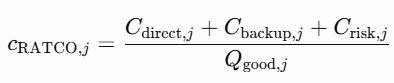
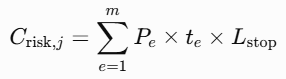
j identifies PSA, liquid nitrogen, or cylinders. Cdirect is normal supply cost, Cbackup is the annual cost of achieving the same backup autonomy, and Crisk is event probability multiplied by expected outage duration and contribution loss per stopped hour. All options must use the same product specification, backup hours, and downtime-loss basis.
How to Calculate On-Site PSA Nitrogen Cost

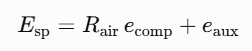
| Symbol | Meaning | Preferred unit |
| Esp | System energy per Nm³ of qualified nitrogen | kWh/Nm³ N₂ |
| pe | Blended electricity tariff including demand effects | currency/kWh |
| M_fixed | Annual fixed maintenance and calibration | currency/year |
| m_var | Throughput-related consumables and maintenance | currency/Nm³ |
| Q_good | Annual qualified nitrogen, excluding off-spec venting | Nm³/year |
| CAPEX | Complete installed-system investment | currency |
| CRF | Capital-recovery factor; i = capital cost, n = years | 1/year |
| R_air | Feed-air ratio at the guaranteed residual O₂ | Nm³ air/Nm³ N₂ |
How to Calculate Liquid-Nitrogen Gas Cost
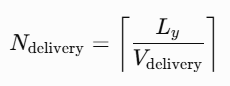


is annual liquid volume, V_delivery is usable liquid per delivery, F_delivery is the delivery fee, and k_LG is the liquid-to-gas conversion at the contract reference state. Air Products reports a 1:694 expansion ratio at 20°C and 1 atm. Linde reports approximately 0.681 Nm³ of gas per liter of liquid at its stated 15°C and 101.3 kPa reference condition.
How to Calculate Cylinder Nitrogen Cost
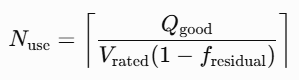

C_rental,y is annual cylinder rental and must not be charged again on every changeover. C_manifold,y is the annualized cost of the manifold, regulators, and alarms. V_rated is deliverable gas at the supplier reference state; f_residual is calculated from the actual return pressure and manifold changeover setting.
What Do the Three Options Cost at 240000 Nm³ per Year
Process basis: Product O₂ ≤0.5%, header pressure 0.5 MPa(g), 3,000 operating h/year, average demand 80 Nm³/h, peak demand 120 Nm³/h, and 240,000 Nm³/year of qualified nitrogen. PSA feed air is 0.75 MPa(g), 25°C, with pressure dew point ≤−40°C; the guaranteed feed-air ratio is no more than 3.2.
Financial basis: Complete PSA CAPEX $120,000, eight years, 8% nominal cost of capital, zero residual value, nominal dollars, and no income-tax effects. Compressor specific energy is 0.11 kWh/Nm³ of feed air, auxiliary energy is 0.01 kWh/Nm³ N₂, and electricity is $0.12/kWh. Liquid nitrogen is $0.20/L with 5% effective loss and 20 deliveries at $300 each. Each cylinder holds 9 Nm³ with 8% residual. Every option includes the same 960 Nm³ emergency cylinder bank, sufficient for eight hours at 120 Nm³/h, annualized at $4,500. Downtime risk is added after plant failure probabilities are established.
| Cost item | On-site PSA | Liquid nitrogen | Cylinders |
| Variable cost | 0.362 kWh/Nm³ × $0.12 = $0.043/Nm³ | $0.20 / [0.681×95%] = $0.309/Nm³ | ($32+$4+$4) / [9×92%] = $4.83/Nm³ |
| Annual fixed and backup | Capital $20,883 + maintenance $6,000 + backup $4,500 | Tank $9,000 + 20×$300 deliveries + backup $4,500 | Rental $3,000 + manifold $1,500 + backup $4,500 |
| Annual direct plus backup | About $41,807 | About $93,694 | About $1,168,000 |
| Qualified-gas unit cost | About $0.174/Nm³ | About $0.390/Nm³ | About $4.87/Nm³ |
What Is the PSA vs Liquid-Nitrogen Break-Even Volume
With installed capacity, purity, and fixed charges held constant, annual PSA and liquid-nitrogen cost are equal at approximately 44,700 Nm³/year. This is a utilization break-even point for the stated installed systems, not a universal market threshold.
Q_break = (PSA annual fixed cost − LN₂ annual fixed cost) / (LN₂ variable unit cost − PSA variable unit cost)
At lower demand, a smaller PSA package would have different CAPEX, air ratio, and maintenance cost, so each candidate size requires a new calculation.
Why Cylinders Can Win at Very Low Food-Plant Demand
Low-volume case: 600 Nm³/year of qualified gas; complete small PSA investment $25,000 and annual maintenance $1,500; liquid service and tank $3,000 plus $1,000 delivery; cylinder rental $400 and annualized manifold $300. Each option includes $600/year for equivalent backup and testing. Other unit inputs remain as in the base case.
| Option | Annual cost | Unit cost | Interpretation |
| Small PSA | About $6,476 | About $10.79/Nm³ | Fixed investment cannot be spread over 600 Nm³/year |
| Small liquid service | About $4,786 | About $7.98/Nm³ | Tank and delivery fixed costs dominate |
| Cylinders | About $4,220 | About $7.03/Nm³ | Low upfront cost is lowest under these assumptions |
How Sensitive Is PSA Cost to Electricity and Part Load
| Scenario | System energy | Electricity price | Power cost |
| Base case | 0.362 kWh/Nm³ | $0.12/kWh | $0.043/Nm³ |
| 25% part-load penalty | 0.453 kWh/Nm³ | $0.12/kWh | $0.054/Nm³ |
| High electricity price | 0.362 kWh/Nm³ | $0.20/kWh | $0.072/Nm³ |
| Part load plus high price | 0.453 kWh/Nm³ | $0.20/kWh | $0.091/Nm³ |
Measured specific energy should include compressor, dryer, cooling, controls, and off-spec venting, normalized by qualified nitrogen rather than total flow.
Which Inputs Change the Supply-Cost Result Most
| Variable | Effect on PSA | Effect on delivered gas | Required evidence |
| Annual utilization | Higher utilization spreads fixed cost | Changes order size and delivery frequency | 12-month hourly load profile |
| Residual O₂ target | Lower O₂ raises air ratio, energy, and size | Purchased grade may change price | Package O₂ and shelf-life results |
| Peak duration | Sets receiver and parallel capacity | Sets vaporizer or manifold capacity | Second- or minute-level peak data |
| Electricity and demand charge | Directly changes variable cost | Usually embedded in vendor price | Time-of-use tariff and peak demand |
| Distance and minimum order | Changes backup-gas cost | Changes fee, contract price, and inventory | Formal quotation and delivery SLA |
| Downtime contribution loss | Sets redundancy and backup scale | Sets safety inventory and dual sourcing | Contribution loss per stopped hour |
| Future expansion | Modular growth or reserved air capacity | Larger tank, deliveries, or vaporizer | Three-to-five-year peak forecast |
How to Quantify Nitrogen Supply Interruption Risk
What Are the Main PSA Failure Points
PSA converts external logistics risk into internal equipment risk. Failure points include power loss, compressor derating, high dryer dew point, filter differential pressure, switching-valve faults, oxygen-analyzer drift, and CMS contamination. The guarantee should state availability at maximum load, recovery time, and backup autonomy. An automatically switched liquid or cylinder source should cover planned maintenance and credible single failures.
Where Can Liquid-Nitrogen Supply Fail
Critical variables are usable inventory days, tanker lead time, tank telemetry, continuous vaporizer capacity, icing, tank pressure, and road access. Calculate usable inventory as:
Usable days = usable liquid volume × k_LG × (1 − loss) / peak daily nitrogen demand
What Commonly Fails in a Cylinder System
The usual failure is not gas purity but inadequate inventory, late changeover, regulator icing or undersizing, wrong connections, and poor full/empty cylinder control. Continuous packaging lines need an automatic changeover manifold, low-pressure alarm, and minimum-inventory reorder trigger.
Which Nitrogen Supply Mode Fits Each Operating Scenario
| Operating case | First option to evaluate | Why | Required safeguard |
| R&D, trials, seasonal low use | Cylinders | Low upfront cost and flexible start/stop | Auto changeover, minimum inventory, safe handling |
| Continuous stable packaging | PSA | High utilization spreads capital and reduces deliveries | Receiver, N+1 critical equipment or backup gas |
| High peaks, ultra-high purity, existing cryogenics | Liquid nitrogen | Wide peak and purity capability | Vaporizer check, inventory days, delivery SLA |
| Continuous production with high downtime loss | PSA plus delivered backup | Separates equipment and logistics failure modes | Automatic changeover and loaded drills |
| Fast growth with uncertain demand | Modular PSA or interim liquid | Preserves expansion and contract flexibility | Staged capacity plan and exit clauses |
US Food Plant Case Switching from Liquid Nitrogen to PSA
A Parker case study describes a food plant in the southern United States producing salad kits, ready meals, and vegetable products. The plant replaced bulk liquid nitrogen with multiple expandable NITROSource PSA generators, a desiccant dryer, and filtration sized for maximum flow and required purity. Parker reports nearly $85,000 per year in financial benefit within two years, followed by additional generator purchases for expansion.
The figure is supplier-published and the source does not disclose original invoices or meter data. The decision path remains useful: establish maximum flow and actual purity, compare delivered-gas invoices with complete on-site cost, and design modular capacity for expansion.
How to Put All Three Options on the Same RFQ Basis
1. Use the same residual O₂, pressure, pressure dew point, impurity limits, and sampling location.
2. Use the same annual qualified volume, average flow, peak flow, and peak duration.
3. Include compressor, air treatment, receivers, instruments, electrical work, and backup in the PSA price.
4. Include tank, vaporizer, rental, delivery, telemetry, minimum orders, and loss boundary in the liquid price.
5. Include deliverable volume, residual pressure, rental, delivery, manifold, and changeover labor in the cylinder price.
6. State protected hours under normal operation, single failure, power loss, and delivery interruption.
7. Calculate unit cost from guaranteed qualified gas and define automatic isolation or venting of off-spec gas.
Food-Plant Nitrogen Supply FAQ
Q At what demand does on-site PSA become economical
A There is no universal flow threshold. Calculate the break-even point from annual qualified volume, load stability, residual oxygen, electricity price, delivered-gas contracts, and capital cost. High utilization generally favors PSA.
Q Which conversion factor should be used for liquid nitrogen
A Use the supplier contract reference state. Public data give about 0.681 Nm³/L at 15°C and 101.3 kPa and about 0.694 m³/L at 20°C and 1 atm. Do not mix the two bases.
Q Does on-site PSA eliminate the need for backup gas
A No. Power, compressor, dryer, valve, analyzer, and maintenance events can interrupt supply. Backup autonomy should cover repair time and critical production batches.
Q Why can cylinders still make sense at low demand
A At low use, capital recovery can exceed the gas cost. Cylinders minimize fixed investment and support intermittent operation, although logistics and labor rise quickly with volume.
Q How should supply reliability be compared
A Use availability, maximum single outage, recovery time, usable inventory hours, and backup-changeover success, then verify the claims in loaded drills.
Conclusion: Select the Supply Model, Then Validate the Guarantees
The lowest-cost supply is the option that meets residual-oxygen, peak-flow, pressure, backup, and service requirements at the lowest risk-adjusted cost. Normalize the boundary conditions, calculate annual qualified volume, and verify guarantees at peak production before committing.
For on-site generation, Minnuo Gas can be considered as one PSA-system supplier. We published guidance covers purity, flow, pressure, feed-air conditions, monitoring, and acceptance testing.Share your needs with us for our professional solutions and services.



 sales2:+86 17506119168